Infectious Disease Modelling using R

Dr. Arun Mitra Peddireddy
JHAPSMCON 2026
4th Annual Jharkhand State Conference of IAPSM

About Me

  • Asst Prof, Dept of CFM @ AIIMS Bibinagar


  • Domain Expertise:
    • Public Health Data Science
    • Spatial Epidemiology
    • Infectious Disease Modeling
    • R Educator


  • Trained in Modern Modeling Techniques @ LSHTM, UK
  • Member of R Epidemics Consortium (RECon), Imperial College, London, UK
  • COVID-19 Testing Data — ICMR

About Us

Team

  • Prof. Biju Soman, Professor, SCTIMST, Trivandrum
  • Dr. Adrija Roy, PhD Scholar, SCTIMST, Trivandrum

Training

  • Basic Epi Course @ IISc, Bangalore (5 Days)
  • Spatial Epi Summer School @ IIT, Bombay (3–4 Days)
  • GIS Short Course @ CUG (5 Days)
  • Data Science for Public Health @ University of Oslo (3 Workshops, Hybrid)

Agenda for Today

Time Session
10:00–11:00 1. Foundations
11:00–11:15 Tea
11:15–12:15 2. Just Enough R
12:15–13:15 3. Compartmental Models
13:15–14:15 Lunch
14:15–15:15 4. Scenario Modelling
15:15–15:30 Tea
15:30–16:30 5. Putting it all Together
16:30–17:00 Q&A and wrap-up

Moments in History

  • Smallpox variolation (1760s)
    Swiss mathematician Daniel Bernoulli modeled the risks and benefits of inoculating against smallpox, considered the first mathematical model of disease spread (universal inoculation would increase life expectancy from 26 years to 29 years).

  • Smallpox eradication (1967–77)
    herd immunity threshold ~85% guided WHO’s surveillance-and-containment strategy.

  • Ebola Vaccine Trial in Guinea (2014–16)
    “ring vaccination trial” (the rVSV-ZEBOV vaccine study), simulated that by immediately tracing contacts of a new index case, the transmission chain could be interrupted .

What is a Model?

A simplified representation of a complex phenomenon.
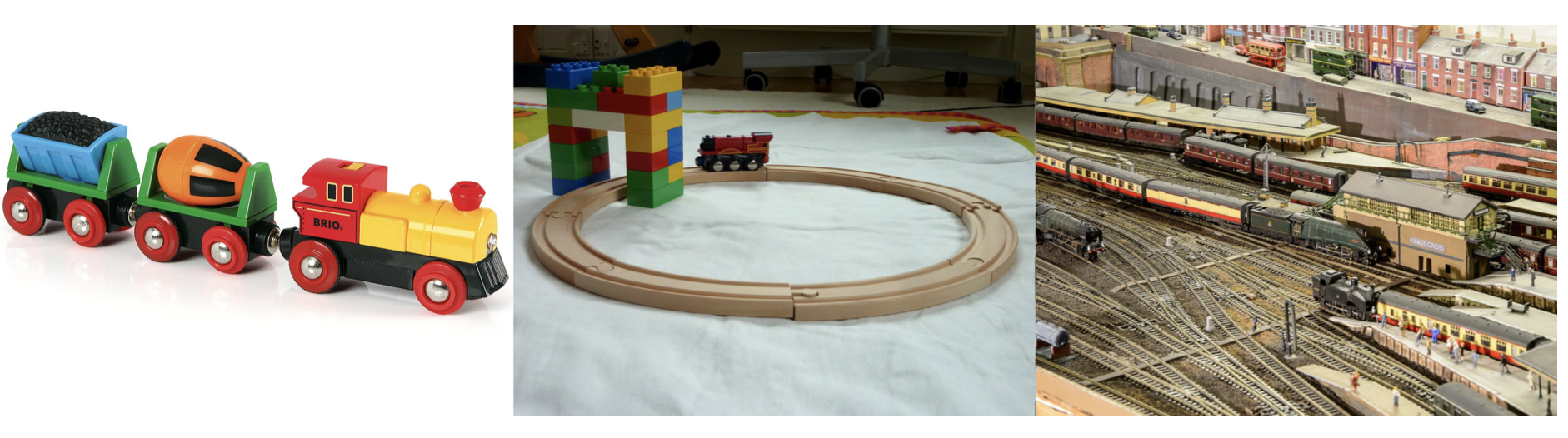

All models are wrong, but some are useful.
— George E. P. Box

Why Model?

  1. Understand transmission — why does measles cycle every 2–3 years?


  1. Assess control — what % vaccination breaks transmission?


  1. Predict — if we don’t act, what happens in 2 weeks?

The Reproduction Number (R0)

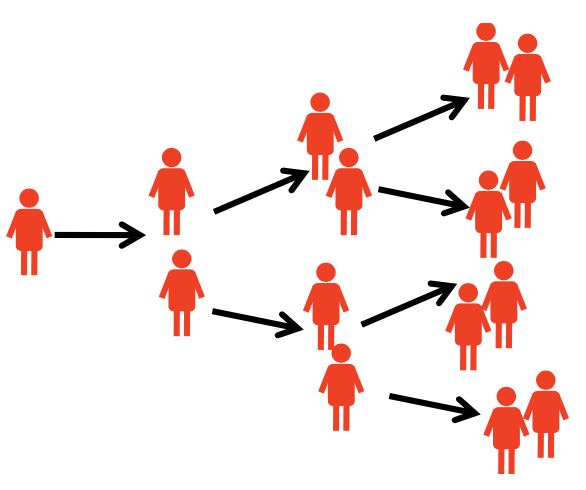
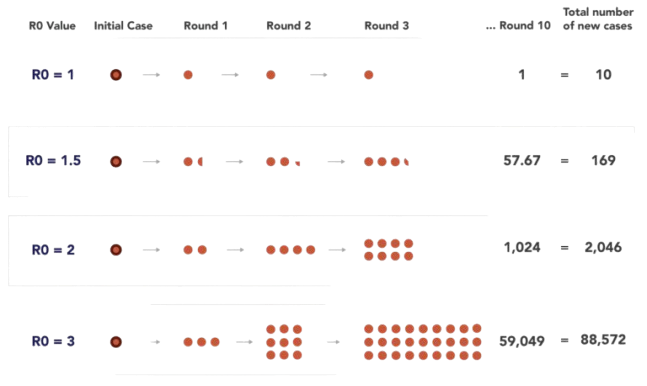
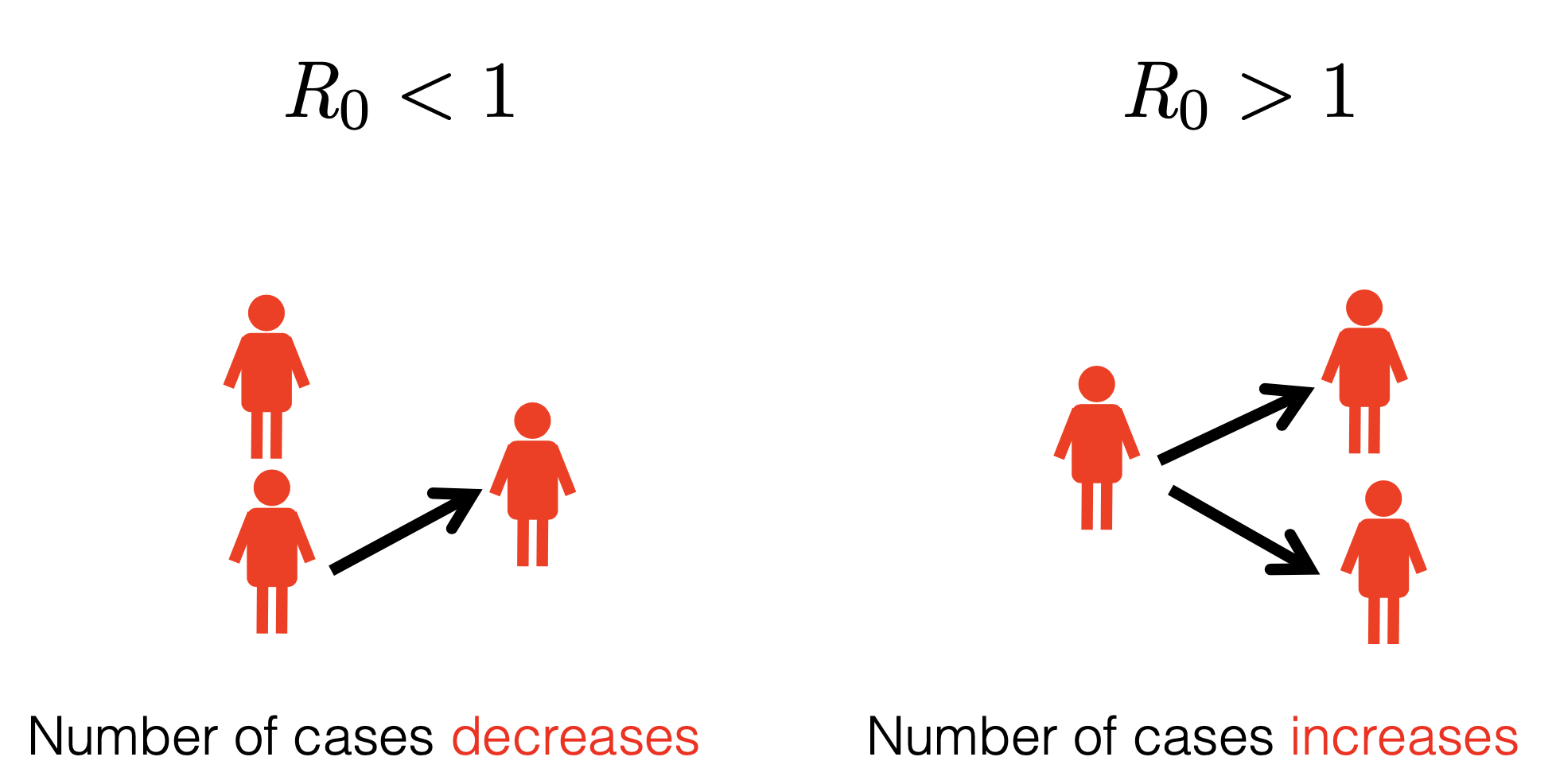
Average number of secondary infectious persons resulting from one infectious person introduced into a totally susceptible population.

The number of secondary cases an infectious person generates.
Rank these Diseases by R0
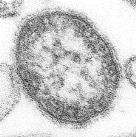
Measles
Malaria
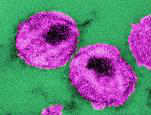
HIV
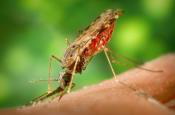
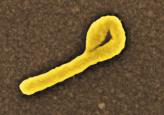
Ebola
Empirical R0 Ranges

Disease R0 range Setting
Malaria 5–100 Highly variable; strong vector dependence
Measles 12–18 Pre-vaccination, high-density populations
HIV 2–5 Sexual transmission networks
Ebola 1.5–2.5 Close-contact outbreaks

R0 tracks transmissibility, not “scariness” or lethality.

What does R0 depend on?

  1. The number of contacts a person has per time (\(c\))
  2. The probability of transmission given contact (\(p\))
  3. The duration of infectiousness, (\(D\))
  4. The proportion of contacts that are susceptible (\(s\))

A simple model would suggest:


\[R_0 = c \times p \times D \times s\]

R0 Depends on Context

Same pathogen, different settings → different R0.

  • Measles in 1950s England: R0 ≈ 16
  • Measles in modern London: Re near 0 (vaccination)
  • Influenza on a cruise ship vs a low-density rural area

Modelling is local work,

And, Context Driven!

Rt in One Line

Today’s new cases come from past cases that are still infectious, weighted by how long ago they were infected.

That weighting = serial interval (or generation time).

\[ I_t = R_t \cdot \sum_{s \geq 1} I_{t-s} \cdot w_s \]

Glossary

Term Plain English
R0 Secondary cases from one case in a fully susceptible population
Rt (Re) Same, but at time t in the real population (some are immune)
Force of infection (λ) Rate at which susceptibles get infected per unit time
Serial interval Time between onset in case A and onset in case B (B infected by A)
Generation time Time between infection of A and infection of B by A
Herd immunity Indirect protection when enough are immune; threshold = 1 − 1/R0
——————— —————————————————

Questions?